
How to Master the Strict and Kipping Pull-up
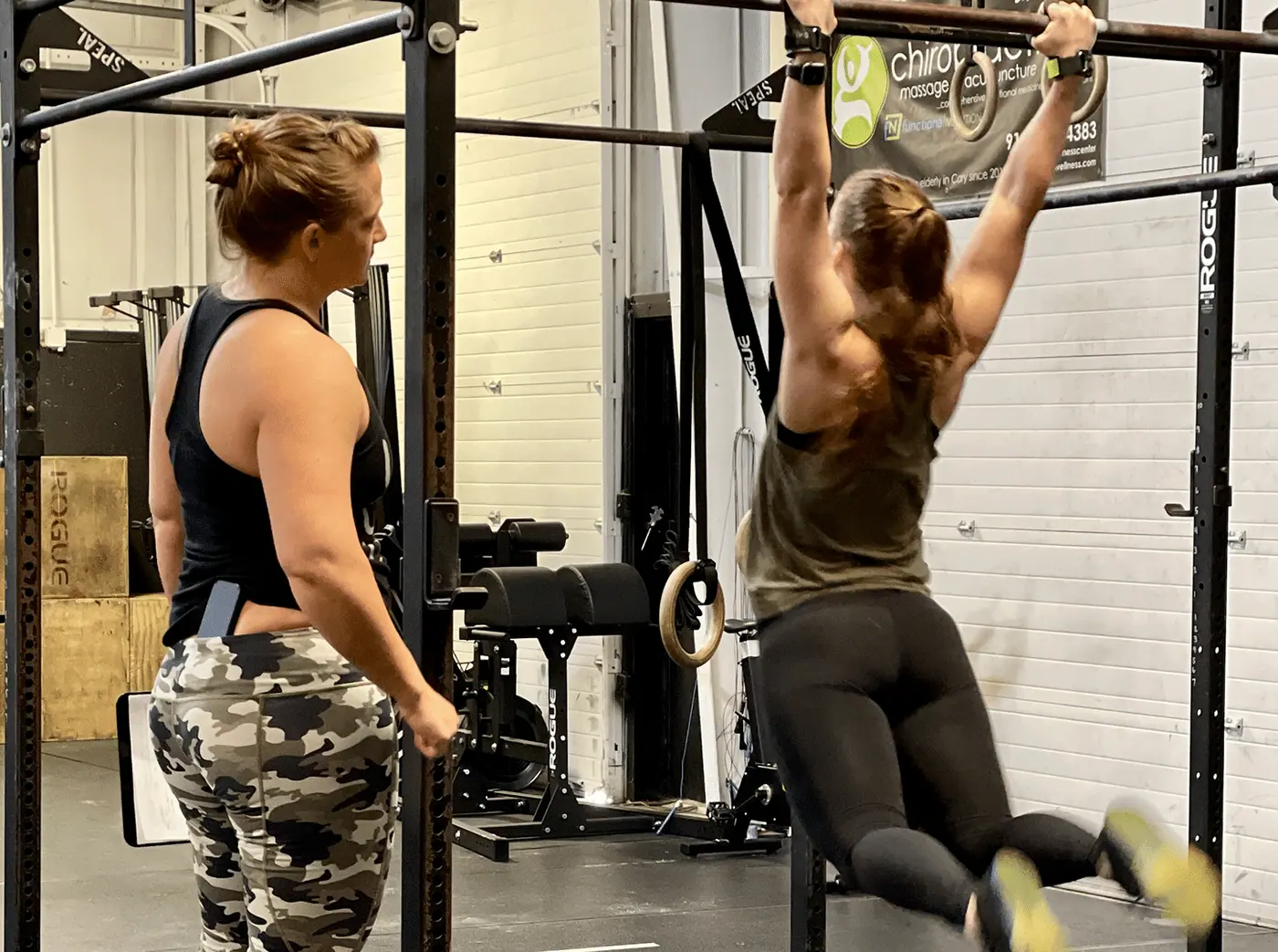
Master both strict and kipping pull-ups with this comprehensive training guide designed for CrossFit athletes of all levels
Pull-ups stand as one of CrossFit’s most fundamental and challenging upper body movements. This compound exercise demands exceptional strength, coordination, and technique while delivering functional fitness benefits that extend far beyond the gym. Whether you’re a CrossFit beginner struggling with your first dead hang or an experienced athlete looking to perfect your kipping technique, this complete training guide will help you achieve your pull-up goals.
What are Pull-Ups? Understanding These Essential CrossFit Movements
Pull-ups are upper body compound exercises where you hang from a bar and pull your body upward until your chin clears the bar. In CrossFit, we primarily focus on two distinct variations that serve different purposes in your training:
Strict Pull-ups
Strict pull-ups are pure strength movements where you pull yourself up using only your upper body strength, maintaining control throughout the entire range of motion. They build raw pulling power and are excellent for developing the latissimus dorsi, rhomboids, rear deltoids, and biceps.
Kipping Pull-ups
Kipping pull-ups incorporate a rhythmic swing that uses momentum generated by your hips and core to assist the pulling motion. While they require less pure upper body strength, they demand excellent timing, coordination, and core stability. Kipping pull-ups are metabolically demanding and commonly used in CrossFit workouts for higher volume training.
Benefits of Pull-Up Training for CrossFit Athletes
Functional Upper Body Strength
- Real-world application: Pull-ups build strength patterns used in climbing, lifting, and daily activities
- Compound movement benefits: Engages multiple muscle groups simultaneously for maximum efficiency
- Grip strength development: Improves hand and forearm strength crucial for other CrossFit movements
- Core stability: Requires significant core engagement to maintain proper body position
Pull-Up Progressions: Your Step-by-Step Training Plan
Building Your Foundation: Prerequisites for Both Movements
Before attempting either pull-up variation, you need a solid foundation of pulling strength and shoulder stability. Master these prerequisite movements first:
Level 1: Foundation Building Exercises
Dead Hangs
Start with dead hangs from a pull-up bar, working up to 30-60 seconds. This builds grip strength and shoulder stability while teaching proper shoulder positioning. Progress to active hangs where you engage your lats and depress your shoulders.
Scapular Pull-ups
From a dead hang, pull your shoulder blades down and back without bending your elbows. This movement teaches proper scapular engagement, which is crucial for both strict and kipping pull-ups. Aim for 3 sets of 8-12 repetitions.
Inverted Rows
Using a barbell in a squat rack or suspension trainer, perform rowing movements at various angles. Start with your body more upright and gradually progress to a more horizontal position as you get stronger. These build the pulling strength pattern you’ll need for pull-ups.
Level 2: Strict Pull-Up Development
Foundation First
The strict pull-up is your foundation. Even if your goal is kipping pull-ups, developing strict strength first will make you safer and more efficient in the long run.
Negative Pull-ups (Eccentric Training)
Jump or step up to the top position of a pull-up, then slowly lower yourself down over 3-5 seconds. This eccentric training builds tremendous strength and is one of the most effective ways to progress toward your first strict pull-up. Perform 3-5 sets of 3-5 negatives.
Band-Assisted Pull-ups
Use resistance bands looped around the bar and under your knees or feet to reduce the amount of bodyweight you’re pulling. Choose a band that allows you to perform 5-8 repetitions with good form. Gradually progress to lighter bands as you get stronger.
Flexed Arm Hangs
Hold yourself at the top position of a pull-up for as long as possible. You can do this from a box as well. This builds isometric strength in the muscles responsible for pull-ups. Work up to holding for 10-20 seconds.
Level 3: Kipping Pull-Up Mastery
Prerequisites for Kipping
You should be able to perform at least 3-5 strict pull-ups before attempting to learn the kip. This ensures you have the necessary strength to control the movement safely.
The Kipping Swing
Start by learning the hollow body and arch positions on the ground. The hollow position involves pulling your knees toward your chest with a rounded back, while the arch position extends your body with a slight backbend. Practice transitioning between these positions while hanging from the bar.
Full Kipping Pull-ups
Begin with small swings, focusing on the rhythm rather than trying to complete a full pull-up. The movement starts with driving your chest and shoulders forward (arch position), then aggressively pulling your knees toward your chest (hollow position). This creates the momentum you’ll use to pull yourself up.
Common Pull-Up Mistakes and How to Fix Them
Rushing Into Kipping
Problem: Many people rush into kipping before developing adequate strict strength
Solution: Build a foundation of 3-5 strict pull-ups before attempting kipping variations. This prevents injury and ensures proper movement patterns.
Poor Shoulder Positioning
Problem: Shrugging shoulders or failing to engage the lats properly
Solution: Focus on scapular pull-ups and dead hangs to learn proper shoulder blade engagement. Keep shoulders down and back throughout the movement.
Neglecting Grip Strength
Problem: Grip often becomes the limiting factor in higher-volume workouts
Solution: Include specific grip work like farmer’s walks, plate pinches, and extended dead hangs in your training routine.
Programming Pull-Ups in Your CrossFit Training
Frequency and Volume
For strict pull-up development, train 2-3 times per week, allowing at least one day of rest between sessions. Focus on quality over quantity, especially when building initial strength.
For kipping pull-up development, practice the movement daily in small doses, focusing on technique rather than volume. Dedicate 2-3 sessions per week to more intensive kipping practice.
Integration with CrossFit Workouts
Pull-ups can be incorporated into your training in several ways:
- Warm-up routines using easier progressions like scapular pull-ups
- Strength training sessions as a primary movement
- High-intensity workouts using kipping variations for time
- Accessory work following main lifts
Scaling for Different Fitness Levels
Every athlete can work toward pull-ups by choosing appropriate progressions. Beginners should focus on building foundational strength with dead hangs and negatives, while advanced athletes can add tempo work or weighted variations.
Recovery and Injury Prevention
Pull-up training can be demanding on your shoulders, elbows, and forearms. Include shoulder mobility work, particularly focusing on overhead flexibility and thoracic spine extension. Strengthen the antagonist muscles with pushing movements like push-ups and overhead presses to maintain balanced development.
Listen to your body and don’t ignore signs of overuse. If you experience persistent joint pain, take a step back and focus on mobility work and lighter pulling variations.
Conclusion: Your Journey to Pull-Up Mastery
Mastering pull-ups requires patience, consistency, and progressive training. Start with the appropriate progression for your current ability level and gradually work toward the full movements. Remember that every CrossFit athlete’s journey is different – focus on steady progress rather than comparing yourself to others.
Pull-ups represent the foundation of upper body pulling strength that defines functional fitness. By incorporating these progressions and training tips into your CrossFit routine, you’ll develop the strength and movement quality that benefits all aspects of your fitness journey.
Ready to Master Your Pull-Ups?
Want personalized guidance on your pull-up journey? Our expert coaches can help you develop the strength and technique needed to achieve your first pull-up or perfect your kipping form.
Schedule Your Free No Sweat Intro
About CrossFit Coordinate
CrossFit Coordinate is your premier CrossFit gym serving the Cary and Apex NC area, dedicated to helping our members achieve their health and fitness goals through expert coaching and a supportive community. Our experienced trainers specialize in scalable CrossFit workouts designed for busy professionals and parents who want to build strength, improve conditioning, and feel confident in their bodies. Whether you’re working toward your first pull-up or looking to master advanced kipping techniques, our welcoming gym offers personalized attention and proven results. Located in Cary, NC near Apex and Holly Springs, we’re proud to be Cary’s go-to destination for functional fitness training. Ready to transform your pull-up game? Contact CrossFit Coordinate today to schedule your free No Sweat Intro and discover why our members love training with us.